Roasted Tomato Olive Halloumi
A simple Mediterranean traybake where juicy cherry tomatoes and briny Kalamata olives roast alongside golden halloumi cubes, finished with a drizzle of olive oil and fresh oregano for a salty umami punch. Light, satisfying and perfect for a slow blood sugar response.
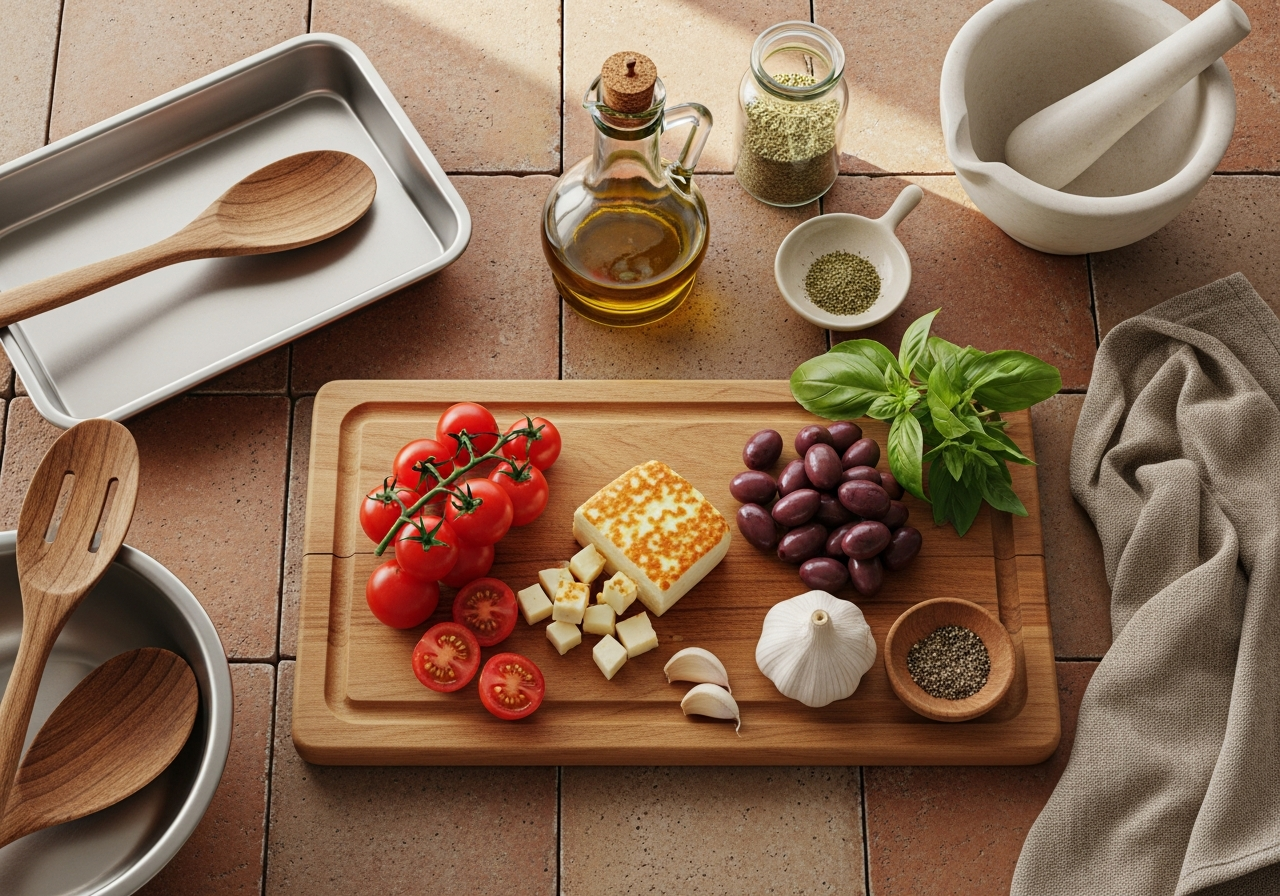
Ingredients
- 250 g cherry tomatoes, halved
- 200 g reduced-fat halloumi, cubed
- 80 g pitted Kalamata olives
- 1 tablespoon olive oil
- 1 teaspoon dried oregano
- 1 clove garlic, thinly sliced
- Black pepper to taste
- Fresh basil leaves for garnish
Instructions
- Preheat oven to 200 °C.
- Spread the cherry tomatoes, olives and garlic on a baking tray.
- Drizzle with olive oil, sprinkle oregano and toss gently.
- Roast for 10 minutes until tomatoes begin to soften.
- Add the halloumi cubes, tossing lightly to coat.
- Return to the oven and roast for another 12–15 minutes until the halloumi is golden and tomatoes are blistered.
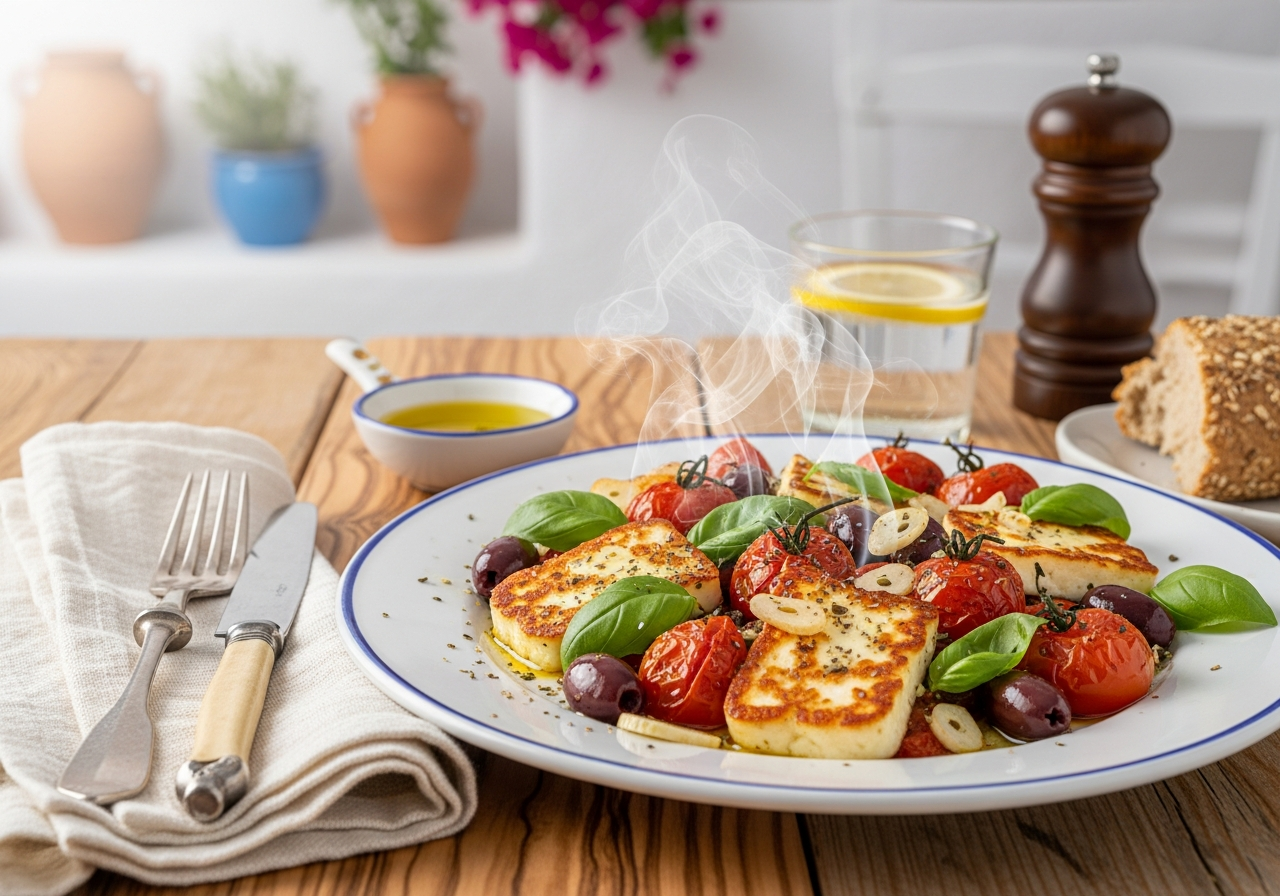
- Season with black pepper and scatter fresh basil before serving.
Notes
Halloumi is naturally salty, so taste before adding any extra salt. Serve with a slice of wholegrain bread to soak up the roasting juices.
Variations
- Pepper Twist: Add strips of red bell pepper for extra sweetness and colour.
- Herb Garden: Swap oregano for fresh thyme and rosemary for a woodsy aroma.
- Lemon Zest: Finish with a little lemon zest for brightness.
- Spinach Bed: Serve over a handful of wilted baby spinach for added greens.
- Caper Kick: Stir in a teaspoon of capers for an extra briny depth.
Fun facts
- Halloumi originates from Cyprus and has a remarkably high melting point, which is why it can be grilled or roasted without losing its shape.
- Kalamata olives are named after the city of Kalamata in the southern Peloponnese region of Greece and are protected under EU origin rules.
- Tomatoes were once feared in Europe and nicknamed the "poison apple" because aristocrats fell ill after eating them off lead-laced pewter plates.
- The word umami was coined by Japanese chemist Kikunae Ikeda in 1908 and means "pleasant savory taste."
- Oregano comes from the Greek words meaning "joy of the mountain" and was traditionally woven into wedding crowns.
- A single olive tree can live for over 2,000 years, with some ancient specimens still producing fruit today.