Grilled White Cabbage Steaks with Creamy Dill-Yogurt Hummus and Crispy Cumin Chickpeas
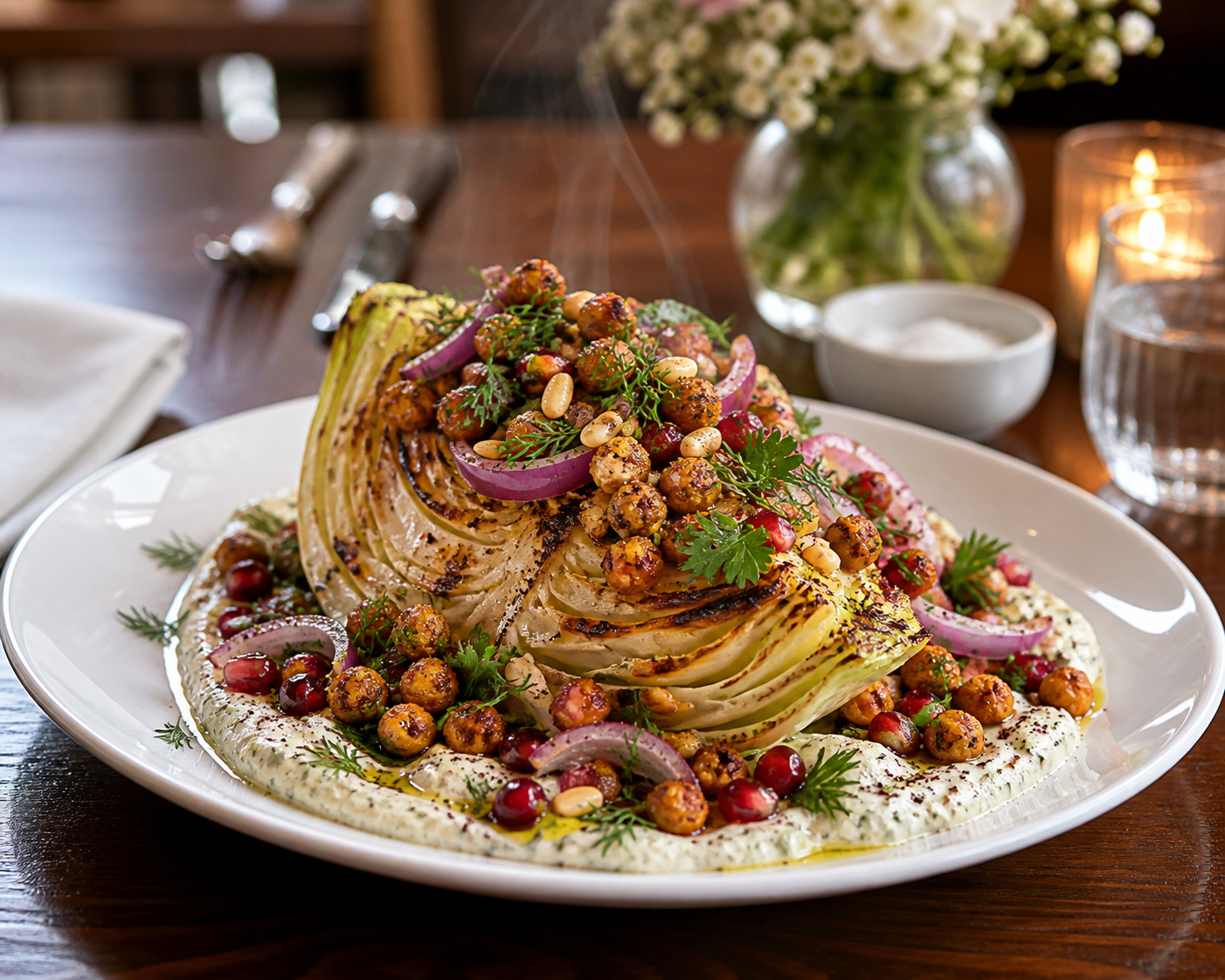
Thick white cabbage steaks grilled to a deep, smoky char and meltingly tender at the core, crowned with a silky garlic-dill yogurt-hummus cream, layered with mellowed red onions, topped with warm cumin-paprika chickpeas toasted until crisp, then finished with jewel-bright pomegranate seeds, toasted pine nuts and a flurry of fresh herbs. A rustic yet elegant vegetarian main that balances smoky, creamy, sweet and crunchy in every single bite — naturally slow-releasing for steady energy and visually stunning on the plate.
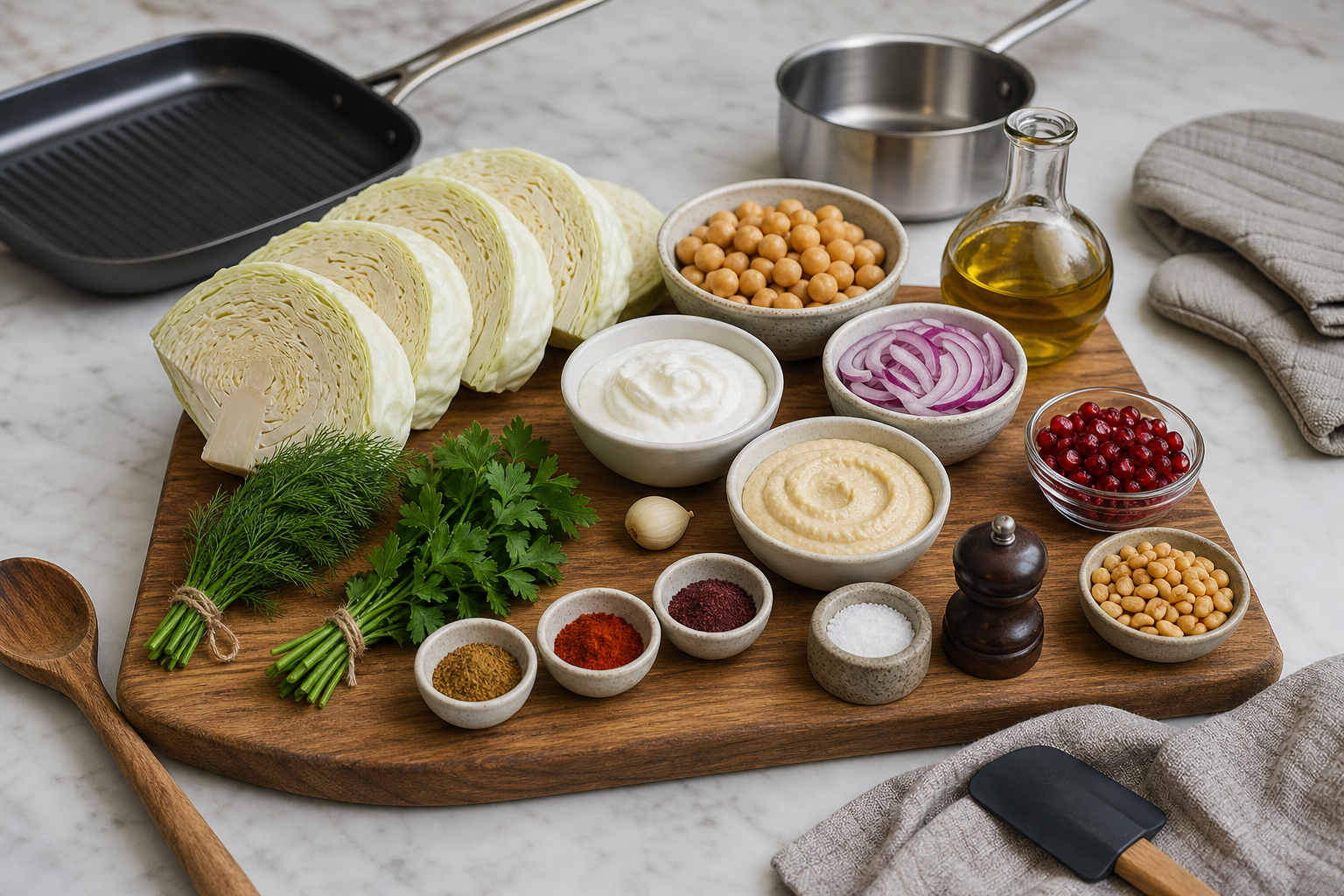
Ingredients
- 1 small white cabbage (cut into 4 thick steaks, core attached)
- 1 can chickpeas (240g drained, rinsed and patted dry)
- 1 small red onion (thinly sliced into half moons)
- 150g low-fat Greek yogurt
- 3 tablespoons hummus
- 2 tablespoons olive oil
- 1 small garlic clove (finely grated)
- 1 small bunch fresh dill (finely chopped)
- 1 small bunch fresh parsley (finely chopped)
- 1 teaspoon ground cumin
- 1 teaspoon smoked paprika
- 1 teaspoon sumac (optional, for finishing)
- 2 tablespoons pomegranate seeds
- 2 tablespoons toasted pine nuts
- Salt and freshly ground black pepper
Instructions
- Place the sliced red onion in a small bowl with a generous pinch of salt. Gently massage for a full minute until the slices begin to soften, then set aside for at least 15 minutes to mellow into a sweeter, silkier version of themselves.
- Pat the chickpeas thoroughly dry with a clean towel — this is the secret to crispy edges. Warm 1 tablespoon olive oil in a small pan over medium-high heat. Add the chickpeas in a single layer and toast undisturbed for 3 minutes. Stir, then add the cumin, smoked paprika and a pinch of salt. Continue toasting for another 4-5 minutes, shaking the pan, until golden, crackly outside and creamy within. Stir in half the parsley off heat.
- Preheat a heavy grill pan or oven grill to very high heat — it should be almost smoking before the cabbage touches it.
- Brush both sides of the white cabbage steaks generously with the remaining olive oil and season firmly with salt and pepper, pressing the seasoning into the leaves.
- Grill the cabbage steaks undisturbed for 6-8 minutes per side (white cabbage is denser than pointed cabbage and needs slightly longer), pressing down occasionally with a spatula. The outer leaves should be deeply charred — almost blackened at the edges — while the core stays just tender with a slight bite.
- Meanwhile, whisk together the yogurt, hummus, grated garlic and most of the fresh dill in a small bowl until smooth and creamy. Season lightly with salt and a pinch of black pepper.
- Spread a generous swoosh of the dill yogurt-hummus cream across each warm plate, creating a luxurious base.
- Place the grilled cabbage steaks directly on top of the cream so the leaves catch the spread.
- Pile on the softened red onions, then spoon over the warm crispy chickpeas while still sizzling.
- Shower with pomegranate seeds, toasted pine nuts, the reserved dill and parsley, an optional dusting of sumac, and a final crack of black pepper.
Notes
- Always keep the core attached when slicing — it's the structural backbone that holds each steak together on the grill, especially important with denser white cabbage.
- White cabbage needs longer grilling time than pointed cabbage to become tender at the core — don't rush it.
- Pat the chickpeas truly dry before toasting; any moisture means soggy chickpeas instead of crispy ones.
- A screaming hot grill pan is essential — low heat steams the cabbage instead of charring it.
- Toast pine nuts dry in a small pan for 2-3 minutes, shaking constantly. They go from pale to perfect to burnt in seconds.
- Build the dish in layers so every forkful catches cream, char, crunch and burst all at once.
- The massaged red onions lose their harsh bite and become almost pickle-like in tenderness.
- If the cabbage chars too quickly before the core softens, finish in a 200°C oven for 5-8 minutes.
- Serve immediately while the chickpeas are still warm and the cabbage is just hot enough to slightly warm the yogurt cream beneath.
Variations
- Swap white cabbage for savoy for ruffled, lacy edges that crisp beautifully.
- Use butter beans instead of chickpeas for an even creamier, more luxurious topping.
- Stir fresh mint into the yogurt for a brighter, cooler twist.
- Replace pine nuts with toasted walnuts, hazelnuts or pumpkin seeds for different textures.
- Add a pinch of za'atar to the yogurt for herby, sesame-rich depth.
- Crumble feta or goat cheese over the top for extra savory richness.
- Replace hummus with smooth white bean puree for a milder, lighter spread.
- Add roasted garlic cloves to the yogurt instead of raw for a sweet, mellow base.
- Serve over a bed of warm farro or barley to turn it into a heartier grain bowl.
Why this meal is good for me and the world
White cabbage is one of the most sustainable, affordable and locally grown vegetables across Europe — with an exceptionally low carbon and water footprint and remarkable storage life that meaningfully reduces food waste through the cooler months.
The combination of chickpeas, Greek yogurt and hummus delivers a beautifully complete plant-forward protein profile, while the abundant fiber from cabbage and legumes ensures a slow, steady blood sugar response with sustained energy and no afternoon slump. White cabbage is particularly rich in vitamin C, vitamin K and glucosinolates — sulfur compounds linked to anti-inflammatory and protective effects. The live cultures in fermented dairy support gut microbiome health, pomegranate seeds deliver some of the most potent polyphenol antioxidants in the plant kingdom, and pine nuts contribute heart-healthy unsaturated fats, magnesium and zinc. Cumin and smoked paprika offer anti-inflammatory compounds without overwhelming heat. The dish stays naturally low in saturated fat thanks to low-fat yogurt while feeling indulgent and satisfying. By centering the plate around brassicas and legumes rather than meat, this meal has a dramatically lower environmental impact — using a fraction of the land, water and emissions of an animal-based main — proving that deeply nourishing food can also be genuinely kind to the planet.