Cauliflower Chickpea Tomato Cheddar Bake
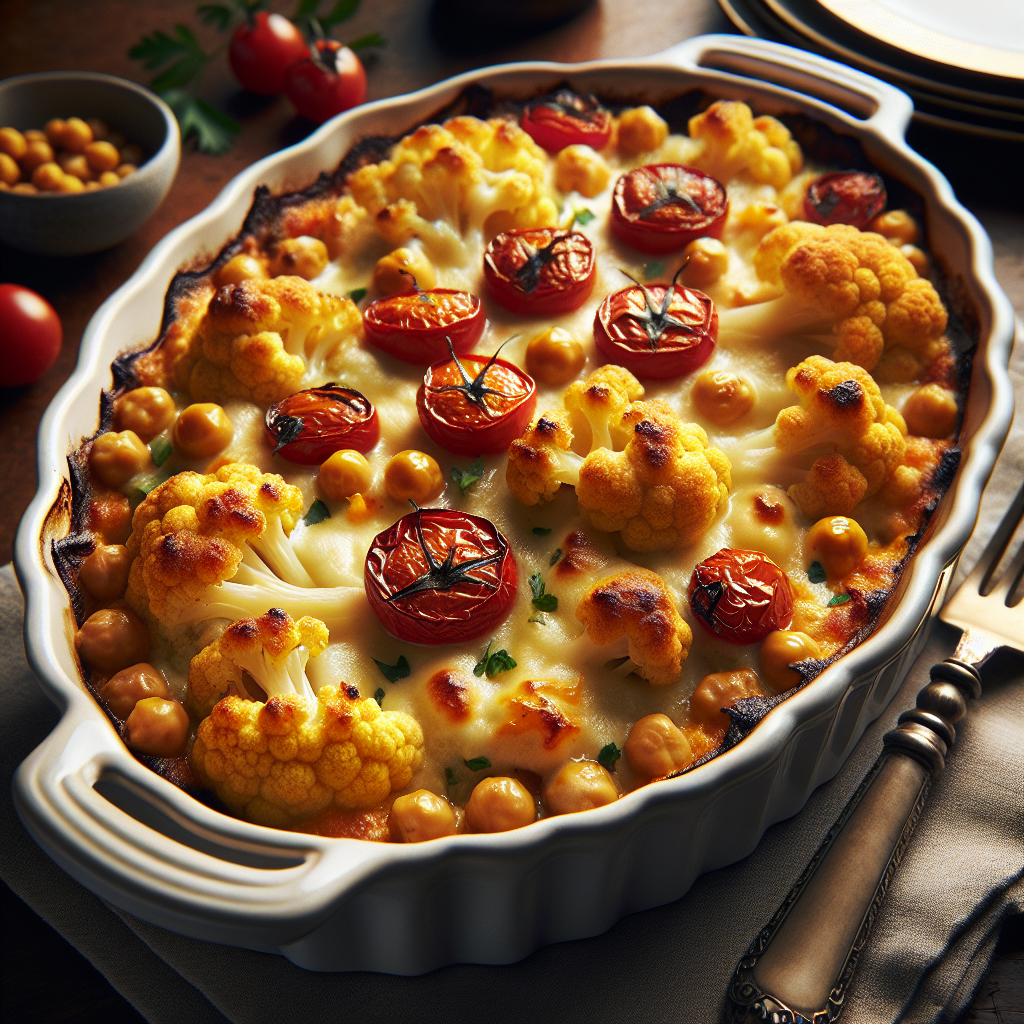
Golden roasted cauliflower florets and burst cherry tomatoes tossed with crispy chickpeas, infused with garlic and thyme, bound in a tangy yogurt-mustard sauce, topped with melted low-fat cheddar and baked until bubbly with a crispy golden crust. Serves two people.
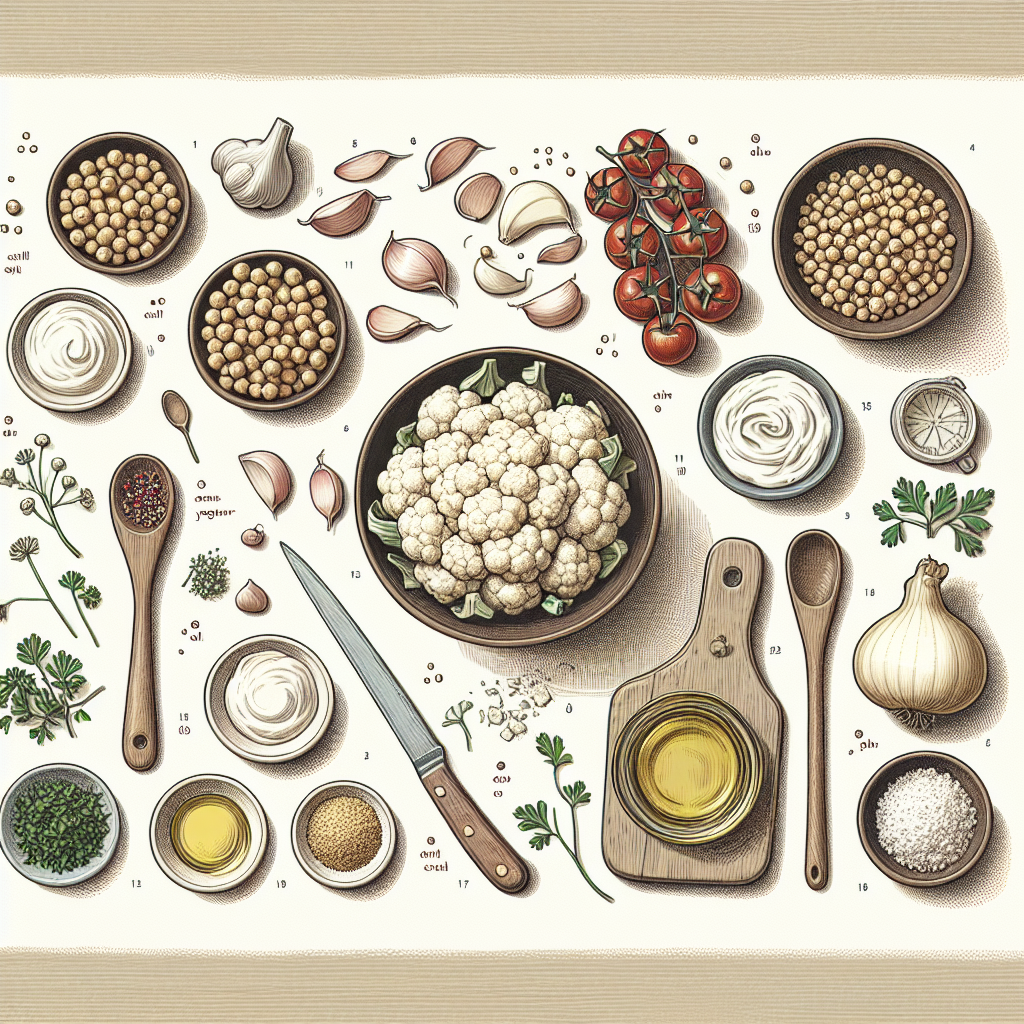
Ingredients
- 1 medium cauliflower, cut into bite-sized florets
- 1 can (400g) chickpeas, drained, rinsed and patted dry
- 250g cherry tomatoes, halved
- 100g low-fat cheddar, freshly grated
- 3 cloves garlic, minced
- 1 tbsp olive oil
- 1 tsp dried thyme
- 1 small onion, finely diced
- 120g low-fat Greek yogurt
- 2 tsp Dijon mustard
- 1 tbsp nutritional yeast
- 1 tsp smoked paprika
- Salt and pepper to taste
Instructions
🔥 Roasting Phase
- Preheat oven to 200°C.
- Pat the chickpeas very dry with a kitchen towel — this is the key to crispy chickpeas.
- On a large baking tray, toss the cauliflower florets and chickpeas with olive oil, two-thirds of the garlic, thyme, smoked paprika, salt and pepper. Spread in a single layer for even browning.
- Roast for 20 minutes, tossing once halfway, until cauliflower is starting to brown and chickpeas are turning crispy.
- Add the halved cherry tomatoes to the tray, gently toss, and roast for another 8-10 minutes until tomatoes burst and cauliflower edges are deeply golden.
🥣 Sauce Phase
- Meanwhile, sauté the diced onion with a splash of water and the remaining garlic in a small pan over medium heat for 4-5 minutes until soft and translucent.
- In a bowl, whisk together the Greek yogurt, Dijon mustard, nutritional yeast, a pinch of salt and a few cracks of pepper.
- Fold the sautéed onion into the yogurt-mustard mixture.
🧀 Assembly and Baking Phase
- Transfer the roasted vegetables and chickpeas to an oven-safe baking dish and let them cool for 2-3 minutes.
- Dollop the yogurt sauce over the top and gently swirl through — don't fully mix, leave creamy pockets.
- Sprinkle evenly with the low-fat cheddar.
- Bake for 10-12 minutes until cheese is melted and edges are crispy.
- Finish under the grill for 2 minutes until the top is golden and blistered.
- Serve warm.
Notes
Important
Drying the chickpeas thoroughly before roasting is essential — wet chickpeas will steam rather than crisp up.
- Roasting the chickpeas alongside the cauliflower gives them a nutty crunch that contrasts with the creamy yogurt sauce.
- Add the cherry tomatoes later in the roasting process so they soften and burst without disintegrating.
- The yogurt-mustard sauce adds creaminess and tang without heavy cream or excess fat.
- Swirling rather than mixing the yogurt sauce creates creamy pockets throughout the bake.
- Leftovers reheat well in the oven at 180°C for 10 minutes with a splash of water on top to prevent drying.
Variations
- Fold in sautéed spinach for extra greens and iron.
- Swap cheddar for low-fat gouda for a deeper, milder flavor.
- Stir in chopped sun-dried tomatoes alongside the cherry tomatoes for intensified tomato depth.
- Top with toasted pumpkin seeds after baking for added crunch.
- Toss in a handful of kalamata olives with the chickpeas for a Mediterranean character.
- Replace the yogurt sauce with low-fat ricotta dollops for a milder, richer version.
Troubleshooting
- Chickpeas not crispy? Ensure the chickpeas are completely dry after rinsing — roll them in a clean kitchen towel and remove any loose skins. Avoid overcrowding the tray; if still soft, roast them 5-10 minutes longer before adding tomatoes.
- Sauce curdling or separating? Let the roasted vegetables cool for 2-3 minutes before swirling in the yogurt sauce, and use yogurt at room temperature rather than straight from the fridge.
- Cheese not melting properly? Grate the cheddar freshly — pre-shredded cheese contains anti-caking agents that hinder melting. Use the grill in the last step to force melting and browning.
- Vegetables soggy instead of roasted? The single layer is crucial — use two trays if needed, pat the cauliflower dry before tossing with oil, and keep the oven at 200°C or higher.
- Tomatoes didn't burst? Spread them cut-side down for direct heat contact, or prick each tomato gently with a knife before adding.