Salmon Miso Bok Choy
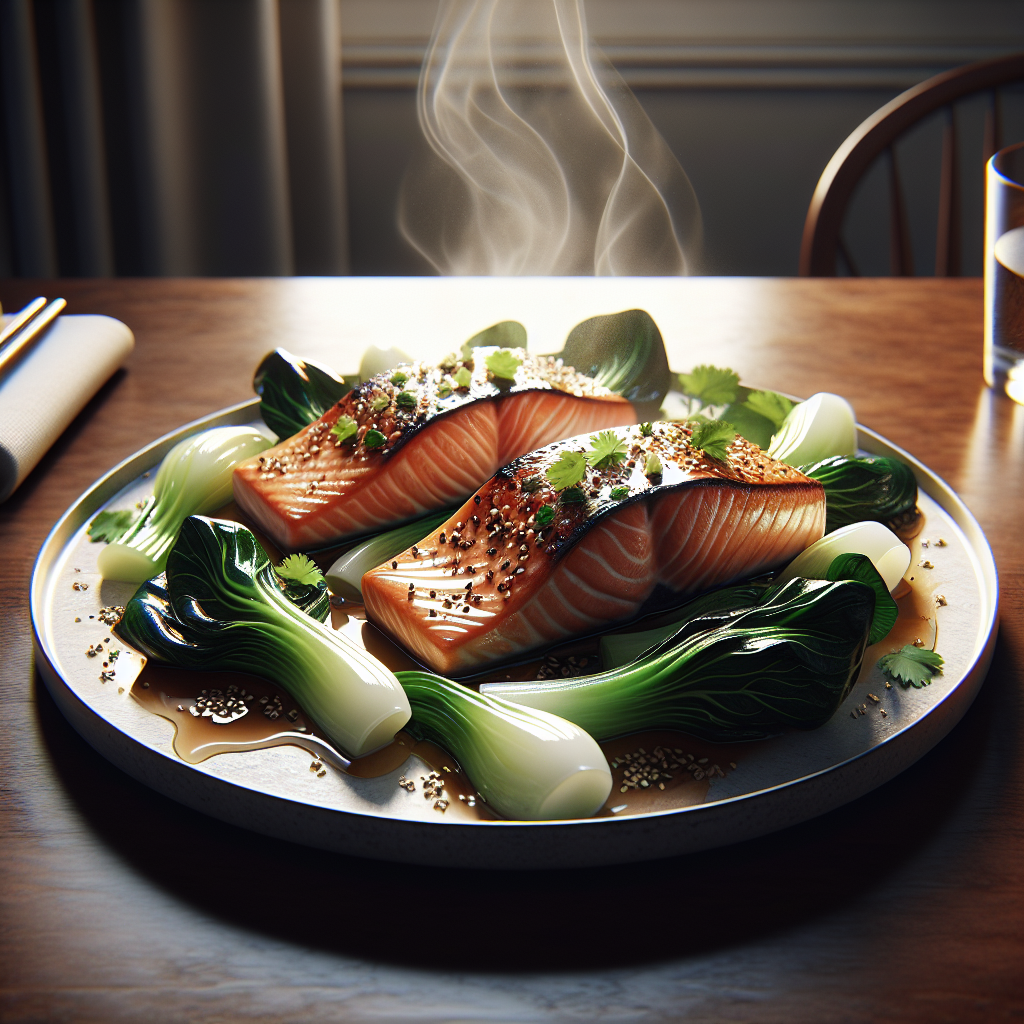
Oven-roasted salmon fillets glazed with a mild white miso paste, served on a bed of wilted baby bok choy with sesame and ginger.
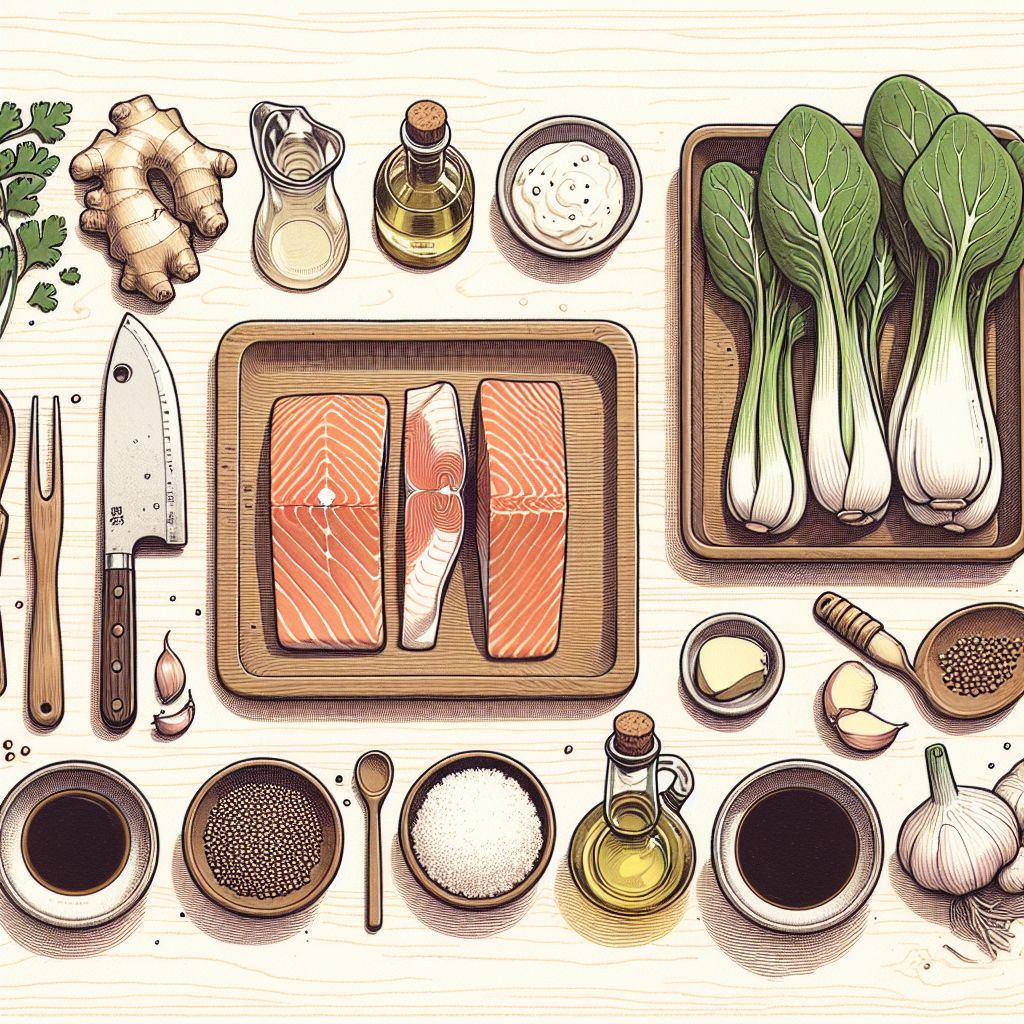
Ingredients
- 2 salmon fillets (approx. 150g each)
- 2 tbsp white miso paste
- 1 tbsp soy sauce (low sodium)
- 1 tsp sesame oil
- 1 tsp freshly grated ginger
- 4 baby bok choy, halved lengthwise
- 1 clove garlic, minced
- 1 tsp olive oil
- 1 tbsp sesame seeds
- Fresh coriander for garnish
- Salt and pepper to taste
Instructions
- Preheat oven to 200°C.
- Mix the white miso paste, soy sauce, sesame oil, and grated ginger in a small bowl until smooth.
- Place the salmon fillets on a lined baking tray, skin side down. Spread the miso glaze evenly over the top of each fillet.
- Roast in the oven for 12–15 minutes until the salmon is cooked through and the glaze is lightly caramelised.
- While the salmon roasts, heat olive oil in a large pan over medium-high heat. Add the garlic and stir for 30 seconds.
- Add the halved baby bok choy, cut side down. Cook for 2–3 minutes, then flip and cook another 1–2 minutes until wilted but still vibrant green. Season lightly with salt.
- Arrange the bok choy on plates, place salmon on top, and sprinkle with sesame seeds and fresh coriander.
Notes
- White miso (shiro miso) is milder and slightly sweet, making it perfect as a glaze without overpowering the salmon.
- Keep an eye on the glaze in the last few minutes — it can go from nicely caramelised to burnt quickly.
- The original request included honey, but it has been omitted per dietary preferences. The natural sweetness of white miso provides a similar effect.
Variations
- Add a handful of edamame beans to the bok choy for extra protein and colour.
- Swap bok choy for tenderstem broccoli or sugar snap peas for a different texture.
- Add a splash of mirin (1 tsp) to the miso glaze for extra depth and mild sweetness.
- Serve alongside soba noodles or barley for a more filling meal.
- Top with thinly sliced spring onion instead of coriander if preferred.
Why this meal is good for me and the world
Health: Salmon is one of the best sources of omega-3 fatty acids (EPA and DHA), which support heart health, reduce inflammation, and benefit brain function. White miso provides probiotics and is rich in B vitamins and minerals. Bok choy is loaded with vitamins A, C, and K, calcium, and antioxidants — all with very few calories. This meal is high in protein, low in carbohydrates, and promotes a slow blood sugar response with no refined sugars or starches.
Sustainability: Salmon farming has improved significantly but still carries concerns around feed sourcing and ocean impact. Choosing ASC-certified or wild-caught Alaskan salmon is the most responsible option. Bok choy and miso are low-impact crops with modest water and land requirements. Overall, this is a relatively resource-efficient protein meal compared to red meat, with a small ingredient list that minimises food waste.